For any professional working outdoors or on a job site, a smartphone is as essential as a power drill or a tape measure. It’s your connection to clients, your access to blueprints, and your primary communication tool. But these environments are unforgiving. A single drop onto concrete, constant exposure to fine dust, or an unexpected rain shower can destroy a standard phone. This raises a critical question for any outdoor professional: is a rugged case worth it, or is it overkill? A standard cover offers basic protection, but a rugged case is professional-grade equipment designed to mitigate specific job site risks. This guide provides a clear framework for deciding if the superior phone protection for outdoor work justifies the daily trade-offs.
Why Your Job Site Demands a Rugged Case
Your smartphone has become an indispensable tool, but job sites present constant threats that typical phone cases are not built to handle. We’re talking about drops from ladders onto concrete, pervasive dust from drywall and sanding, and sudden exposure to rain or mud. In these high-stakes environments, a standard case designed for office life offers minimal defence. The core issue is whether that basic protection is enough, or if a specialised heavy duty phone case is a non-negotiable piece of equipment.
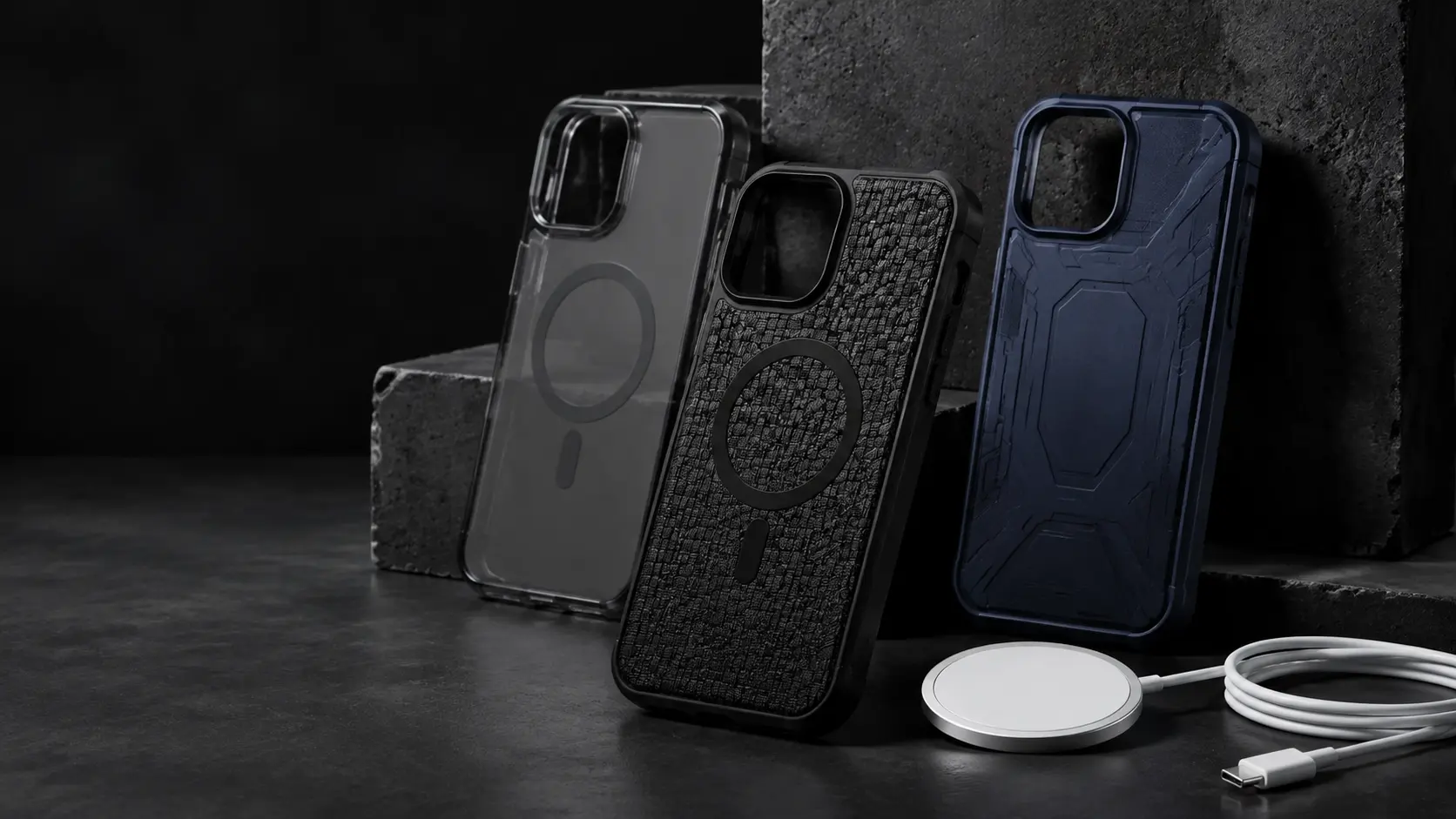
A rugged case is not just a thicker version of a regular case. It is purpose-built gear, engineered to absorb impacts and seal out contaminants that would otherwise destroy your device. It transforms a fragile piece of consumer electronics into a durable work tool. This article will help you weigh the benefits of this advanced protection against the practical trade-offs, so you can make an informed decision for your work.
Key Features That Define True Protection
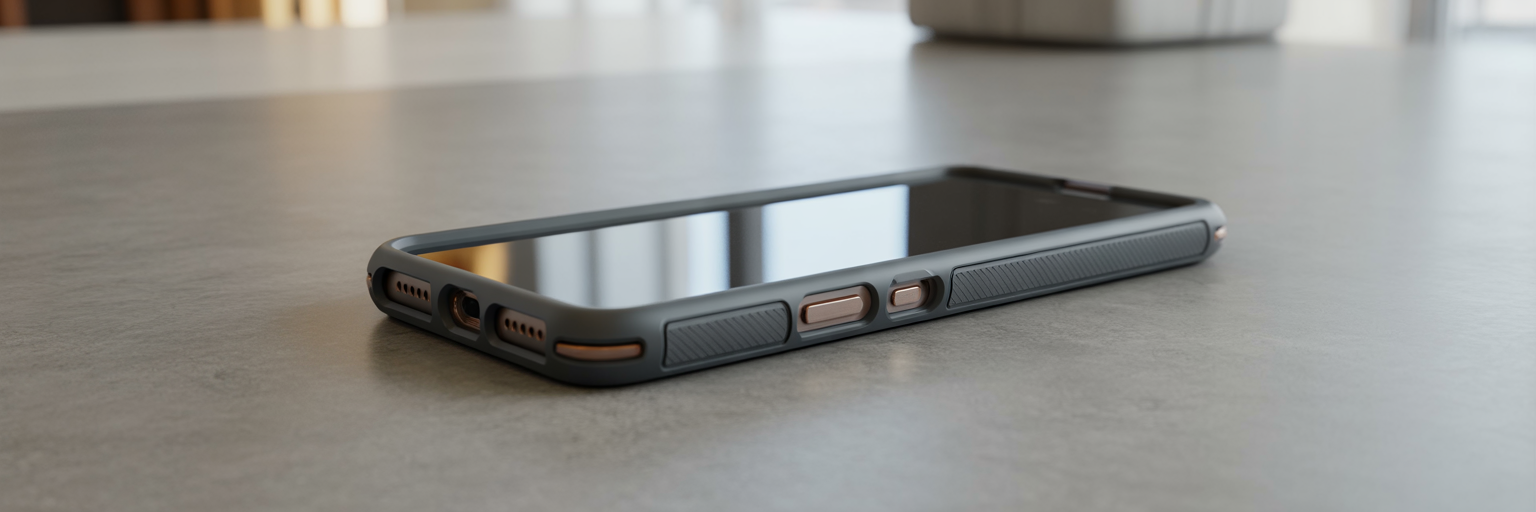
When we test rugged cases, we look for specific features that deliver on the promise of extreme protection. These are not cosmetic additions but functional elements engineered to withstand the rigours of a demanding workplace. Understanding them helps clarify why a standard case often falls short in these environments.
Military-Grade Impact Resistance
You will often see cases advertised with MIL-STD-810G or 810H certification. In practical terms, this means the case is tested to survive repeated drops from significant heights, often between 6 and 10 feet, onto hard surfaces like concrete. A quality MIL-STD 810G phone case achieves this with a multi-layer design, typically combining a rigid polycarbonate outer shell to deflect force and a soft TPU inner layer to absorb shock. This combination is what prevents a catastrophic impact from reaching your phone.
Screen and Camera Defense
A phone almost always lands on a corner or edge, but a flat drop onto its face is devastating. Raised bezels, or lips, around the screen and camera lenses are critical. We look for a bezel of at least 1.5mm to 2mm, which is substantial enough to keep the glass from making direct contact with a flat surface during a fall. This small feature is often the difference between a shattered screen and a fully intact phone.
Environmental Sealing Against Dust and Moisture
Job sites are filled with fine particles like sawdust, metal shavings, and concrete dust that can easily work their way into charging ports and speaker grilles, causing permanent damage. Rugged cases feature tight-fitting port covers that create a seal against these contaminants. While not fully waterproof unless they have a high IP rating, these seals provide essential protection against dust, splashes, and moisture that would compromise an unprotected device.
Secure Grip for Gloved Hands
Dropping a phone is often a matter of poor grip. A sleek, smooth case is impractical when you are wearing work gloves or have dusty hands. Rugged cases are designed with heavily textured sides and rubberised materials that provide a confident, secure hold. This proactive feature helps prevent drops from happening in the first place. While these features define a rugged model, understanding the full range of options in our guide to how to choose a phone case can help clarify why this level of protection is essential for demanding jobs.
The Practical Trade-Offs of Heavy-Duty Use
While a rugged case offers unmatched protection, it comes with compromises that affect daily usability. Acknowledging these trade-offs is key to making a practical choice. Based on our hands-on testing, the downsides fall into three main categories.
First is the significant increase in bulk and weight. A heavy-duty case can easily double the thickness and weight of your phone. This makes it far less comfortable to carry in a pocket, often requiring a belt holster. The added size also makes one-handed use more challenging, which can be a frustration when you need to quickly check a message or answer a call on site.
Second, you may face compatibility issues. The thick materials used for drop protection, often exceeding 5mm, can weaken or completely block wireless and MagSafe charging. You might find your MagSafe wallet barely clings on or your phone refuses to charge on a wireless pad. Furthermore, the port covers that protect against dust add an extra step every time you need to plug in a charging cable, which can be cumbersome.
Finally, there is the functional-first aesthetic. Rugged cases prioritise protection above all else, and their appearance reflects that. They are often bulky and utilitarian, which can feel out of place in a social or office setting. For many users, the case feels like overkill when they are not on the job, leading them to swap cases back and forth.
| Feature | Standard Case | Rugged Case |
|---|---|---|
| Drop Protection | Protects from 3-4 ft drops (desk height) | Protects from 6-20 ft drops (ladder height) |
| Bulk & Weight | Minimal; preserves phone’s original profile | Significant; adds noticeable size and weight |
| Dust & Debris | Open ports offer little to no protection | Sealed ports block fine dust and moisture |
| Wireless Charging | Generally compatible | May be blocked by thick materials or metal |
| Pocketability | High; slides easily into pockets | Low; may require a holster or work belt |
This table summarizes the key functional differences between a standard case and a rugged case. The choice depends on balancing the need for extreme protection against the desire for convenience and a slimmer profile.
Checklist: Deciding on Your Protection Level

To determine if a rugged case is right for you, assess your specific work conditions. This checklist will help you translate the features we have discussed into a practical decision based on your daily reality.
- Assess Your Environment. Does your job site involve fine dust from concrete, sanding, or drywall? Are you frequently exposed to rain, mud, or moisture? If so, a case with sealed ports and a solid IP rating is essential. This is a primary reason why many consider a rugged model the best rugged case for construction work.
- Consider Your Working Height. Do you work on ladders, scaffolding, or rooftops? A drop from 4 feet is very different from a drop from 10 feet or more. If your workday involves heights, you need a case with a high drop rating (10+ feet). Some rugged cases also include lanyard attachment points to prevent falls altogether.
- Analyze Your Daily Workflow. How do you handle your phone on the job? If you are often juggling tools or materials, your risk of dropping the phone increases. A case with a secure grip, a built-in hand strap, or a holster system can be a lifesaver, keeping your device secure while your hands are full.
- Confirm Your Charging Method. If you rely on MagSafe or wireless charging at home or in your vehicle, this is a critical check. Before buying, verify the case’s compatibility with wireless charging. Many rugged case manufacturers explicitly state whether their products work with MagSafe and other wireless chargers, so you can avoid any frustrating surprises.
When Standard Protection Is Good Enough
A rugged case is not the right choice for everyone, and in many situations, it is simply unnecessary. For professionals in low-risk roles, a well-made standard case provides an ideal balance of protection and convenience. If your work is primarily desk-based or takes place in clean, indoor environments like a finished office or a retail store, your risk profile is much lower.
In these scenarios, drops are more likely to happen from desk height onto a forgiving surface like carpet or wood flooring. For this, “good” standard protection is more than sufficient. Look for a quality slim case that still offers key defensive features, such as air-cushioned corners for impact absorption and a modest bezel to protect the screen from scratches when placed face down. These cases defend against everyday bumps and fumbles without adding significant bulk.
Ultimately, the decision is about matching the tool to the task. A standard case is perfectly adequate for a controlled environment, just as a rugged one is essential for a hazardous one. For many users, a slim, protective case offers all the security they need without compromising the phone’s design or functionality.
Maintaining Your Phone and Protective Case
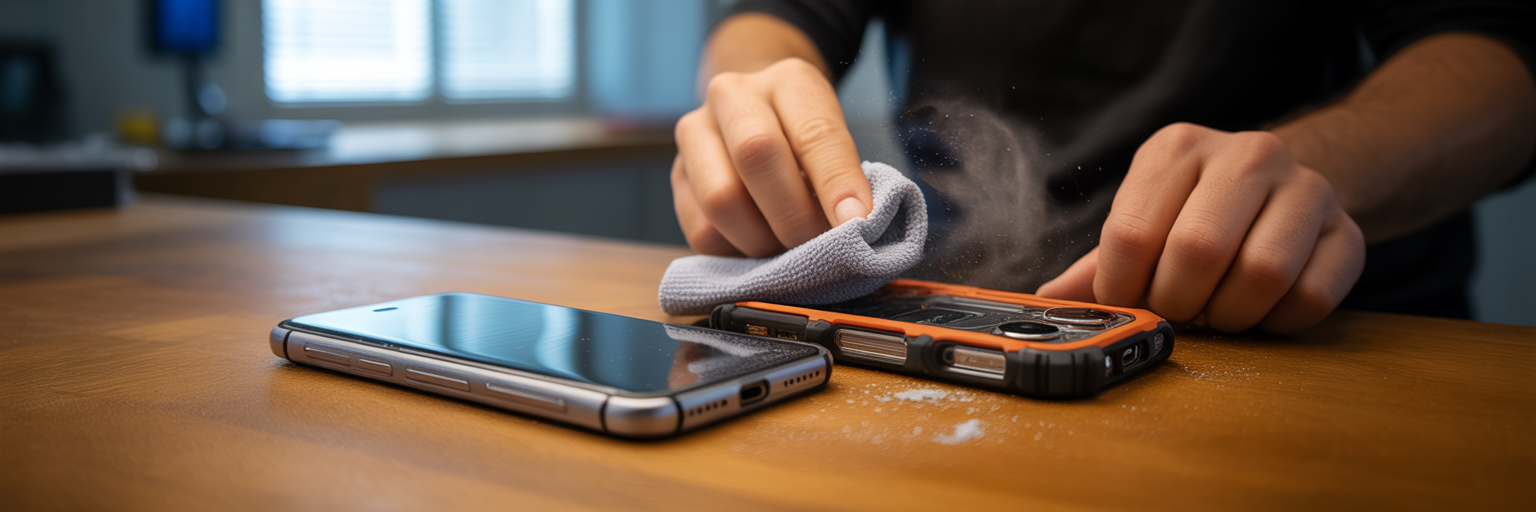
Choosing the right case is the first step, but simple maintenance ensures it continues to protect your investment. We recommend a quick cleaning routine at least once a week. Remove your phone from its rugged case and wipe down both the device and the inside of the case with a clean microfiber cloth.
The reason is simple: no matter how tight the seal, fine grit and dust can eventually get trapped between the case and the phone. Over time, this debris acts like fine-grit sandpaper, causing micro-abrasions and cosmetic damage to your phone’s finish. A rugged case is an investment in a critical work tool, and combining proper selection with this simple maintenance ensures it delivers on its promise of protection.