Match protection, materials and features to the way you actually use your phone.
Start with your real risk
Frequent drops call for reinforced corners and a raised screen edge. Pocket carry favors a slimmer case with smooth edges. Outdoor work may justify port covers and extra grip, while desk use usually does not.
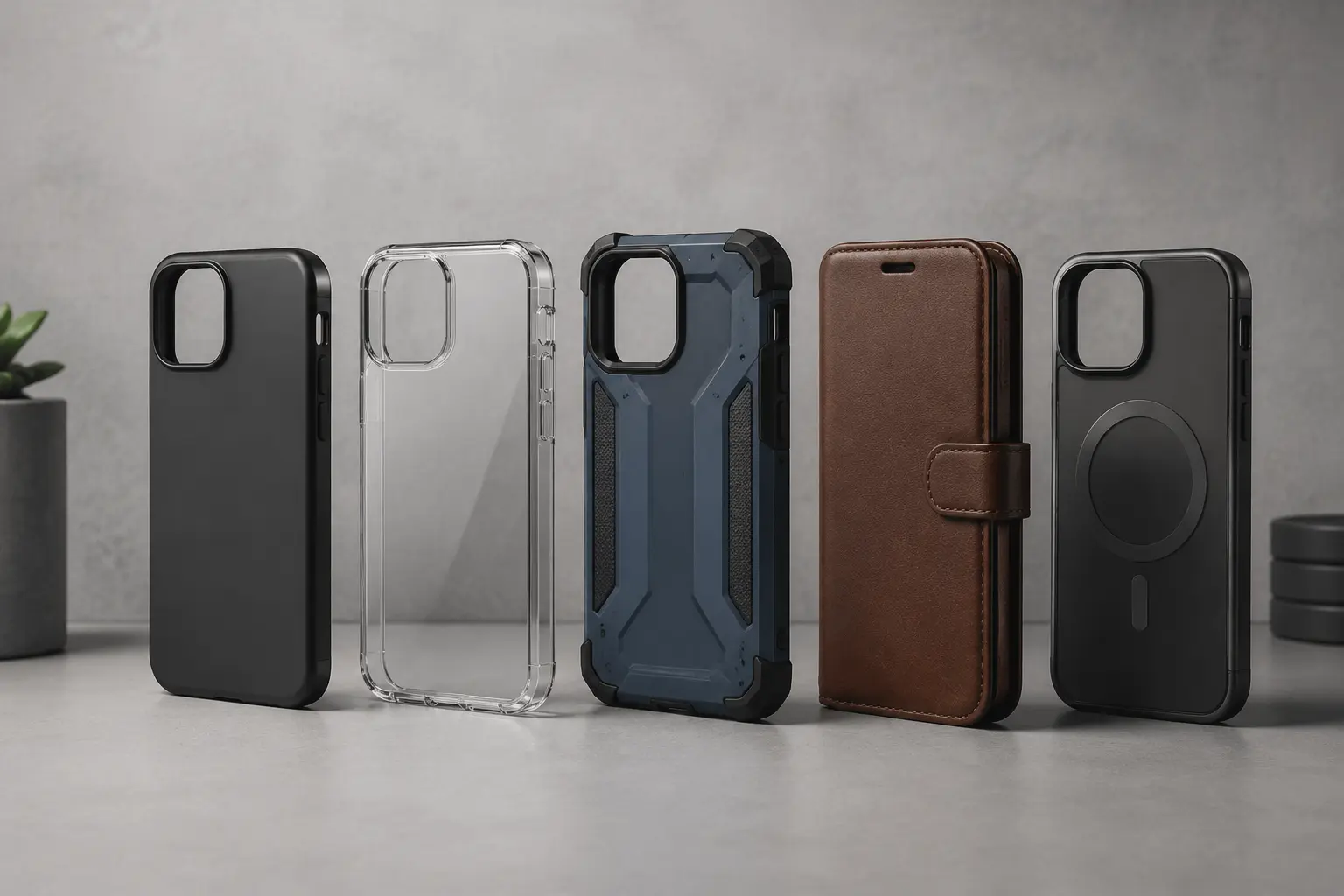
Check compatibility
Match the exact phone model, including Plus, Pro and Ultra variants. Confirm that camera controls, magnetic charging, wireless charging and your preferred screen protector work with the case.
Choose the material
TPU absorbs impact but can stretch or yellow. Polycarbonate adds structure but can crack. Silicone grips well but collects lint. Leather ages visibly. The right material is the one whose tradeoffs fit your routine.
Match the Case to Your Protection Level
| Use pattern | Case type | Features to prioritize |
|---|---|---|
| Careful indoor use | Slim or hybrid | Raised edges, responsive buttons |
| Frequent drops | Protective hybrid | Reinforced corners, grippy sides |
| Outdoor or trade work | Rugged | Layered shell, port coverage, holster option |
| Cards instead of a wallet | Folio or magnetic wallet | Secure slots and closure |
Check the Details Before Ordering
Phone names are easy to confuse. Confirm the model in Settings and pay attention to Plus, Pro, Pro Max, Ultra, FE and generation numbers. Check whether the case is compatible with your screen protector, magnetic charger, camera control and preferred cable.
Common Buying Mistakes
Do not choose solely from a claimed drop height. Test methods vary, and a large number does not tell you how the buttons feel or whether the case stays on a corner. Avoid generic metal rings if you use wireless charging, and do not assume a thick case is automatically well designed.
Protection Features That Matter Most
Reinforced corners are more useful than decorative ridges across the back. A flexible inner layer can absorb energy while a rigid outer section keeps the case from peeling away. The screen lip and camera ring should remain above the glass when the phone is placed on a flat surface.
Grip prevents drops, so consider it part of protection. Very smooth plastic and polished metal-look edges may photograph well but feel insecure one-handed. Deep texture is not always necessary; a matte surface or small side ribs can be enough.
Try This Final Compatibility Check
- Exact phone model and generation
- Screen protector clearance
- Wireless or magnetic charging alignment
- Camera-control and stylus access
- Cable connector clearance
- Car mount, wallet and stand compatibility
Frequently Asked Questions
What case material protects best?
A well-designed combination of flexible TPU and rigid polycarbonate provides a useful balance for most people.
Are expensive cases always better?
No. Fit, corner design and usability matter more than price alone.
How much screen lip is enough?
The edge should keep the glass off a flat surface without interfering with swipes or a screen protector.