The main appeal of a wallet case is simple: carrying less. For anyone looking to leave a bulky, traditional wallet behind, combining a phone and essential cards into a single item is an efficient way to simplify your daily carry. The market for card-storage wallet cases offers a practical solution, but choosing the right one involves understanding key trade-offs. These cases are just one of many types of phone cases available, each designed for a specific purpose.
Wallet cases generally come in three distinct styles: folio cases that wrap around the phone, rear-slot cases with integrated pockets, and detachable magnetic wallets. Each design presents a different balance of card capacity, device protection, and convenient access. Your ideal choice will ultimately depend on your personal priorities, including how many cards you carry, your charging habits, and the level of protection you expect.
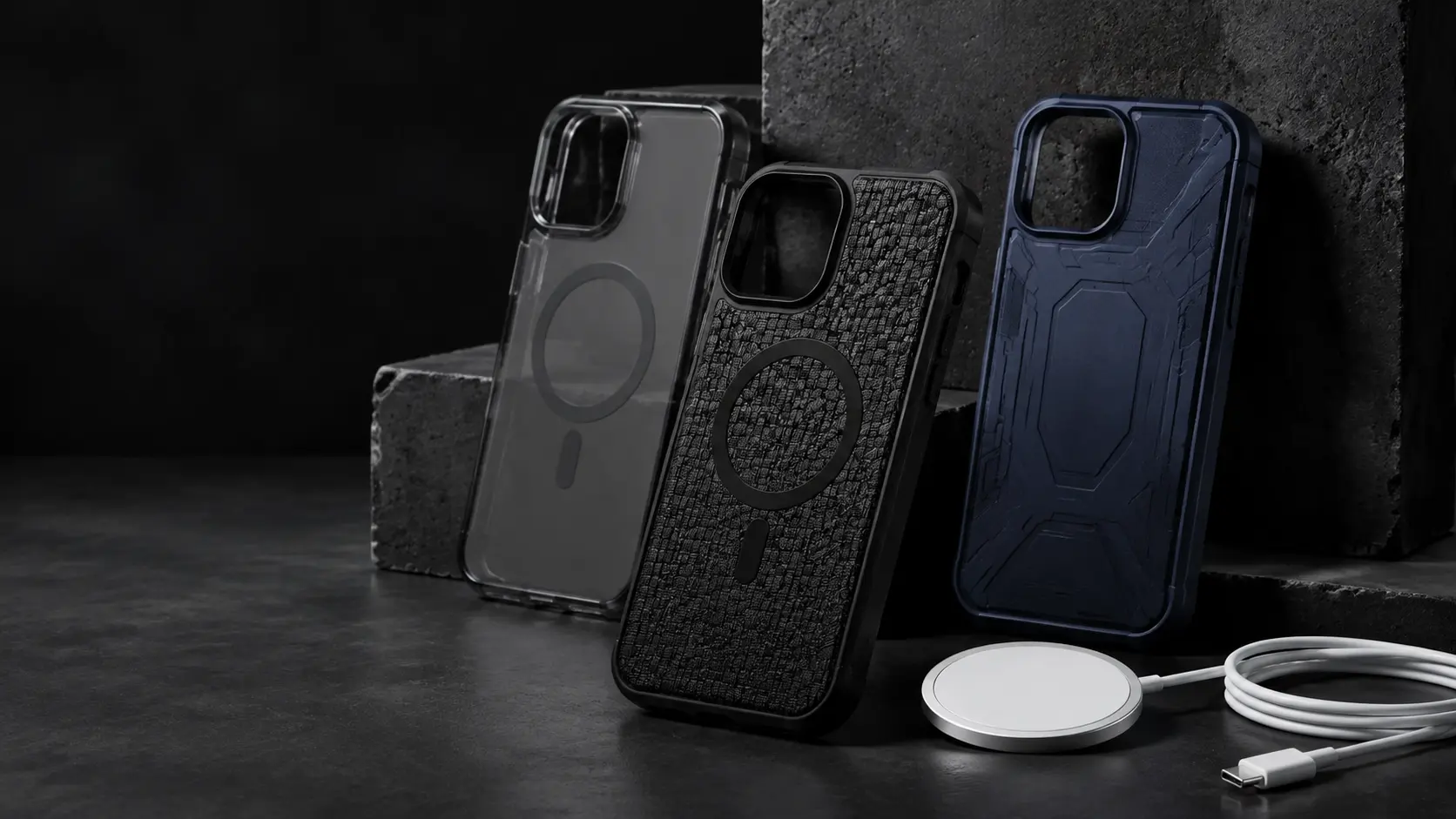
What to Know About Card-Storage Wallet Cases
A wallet case offers the convenience of combining your phone and wallet, but the design you choose directly impacts its daily usability. The three primary styles—folio, rear-slot, and detachable—each come with distinct advantages and disadvantages based on our hands-on testing. Understanding these differences is the first step to finding a case that fits your lifestyle instead of forcing you to adapt to its limitations.
Your decision should be guided by how you use your phone and what you need to carry. A person who needs five cards and values screen protection will have different priorities than someone who only carries an ID and a credit card and relies on wireless charging. This section breaks down the core features of each layout to help you compare them directly.
Folio Cases
Folio cases feature a book-like cover that wraps around your phone. The front flap typically includes several card slots and a pocket for cash. Their main advantage is providing full-screen protection when closed and offering the highest card capacity, often holding three or more cards. However, this design adds significant bulk, and the flap can be cumbersome to open for quick phone access.
Rear-Slot Cases
These are standard protective cases with card slots integrated into the back. Their primary benefit is a slim profile and instant access to your phone’s screen. The main trade-off in the folio vs slot wallet case debate is capacity and screen safety. Rear-slot cases usually hold only one to three cards and offer no built-in screen protection, making a separate screen protector essential.
Detachable Wallet Cases
A detachable wallet case uses a two-part magnetic system: a slim case that stays on your phone and a separate wallet portion that attaches to the back. This design offers the most versatility. You can have a full wallet setup when you need it and a simple, slim case when you don’t. This modularity is its key selling point, especially for users of MagSafe accessories.
| Feature | Folio Case | Rear-Slot Case | Detachable Wallet Case |
|---|---|---|---|
| Typical Card Capacity | 3–5 cards | 1–3 cards | 2–4 cards |
| Screen Protection | High (when closed) | None (requires screen protector) | None (requires screen protector) |
| Overall Bulk | High | Low | Medium (removable) |
| Wireless Charging | Usually incompatible | Incompatible with cards inside | Compatible when wallet is detached |
| Access to Phone | Requires opening flap | Instant | Instant |
This table compares the three main wallet case designs based on our hands-on testing and evaluation of popular models. Capacities and features can vary by brand, but these represent the typical user experience for each style.
Realistic Card Capacity and Bulk
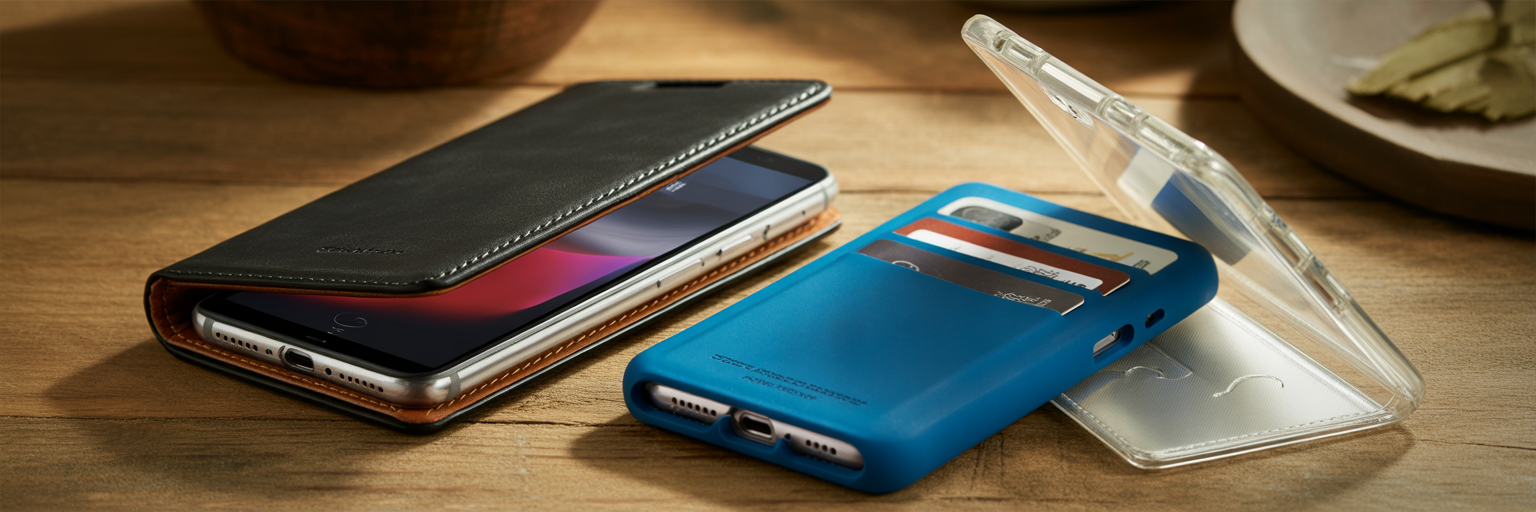
Advertised card capacity often differs from practical, everyday use. Our testing shows that overstuffing a phone case with card holder creates real problems. Pushing a case to its limit can strain the stitching, cause the material to stretch permanently, and make cards extremely difficult to remove when you are standing in a checkout line. More importantly, it can compromise the case’s fit and protective qualities.
With folio cases, forcing in too many cards can prevent the cover from closing flat. When this happens, the cards can press directly against your phone’s display, creating pressure points that may lead to micro-scratches over time. For this reason, we strongly recommend using a quality screen protector with any folio-style case, regardless of how many cards you carry.
For detachable magnetic wallets, the risk is different. Overloading the wallet portion weakens the magnetic connection to the case. A wallet packed with five cards and cash is much more likely to get knocked off and lost than one holding the recommended two or three cards. For a secure attachment, we found a practical limit of two to three cards plus a single folded bill is best.
Wireless Charging and Magnetic Mounts
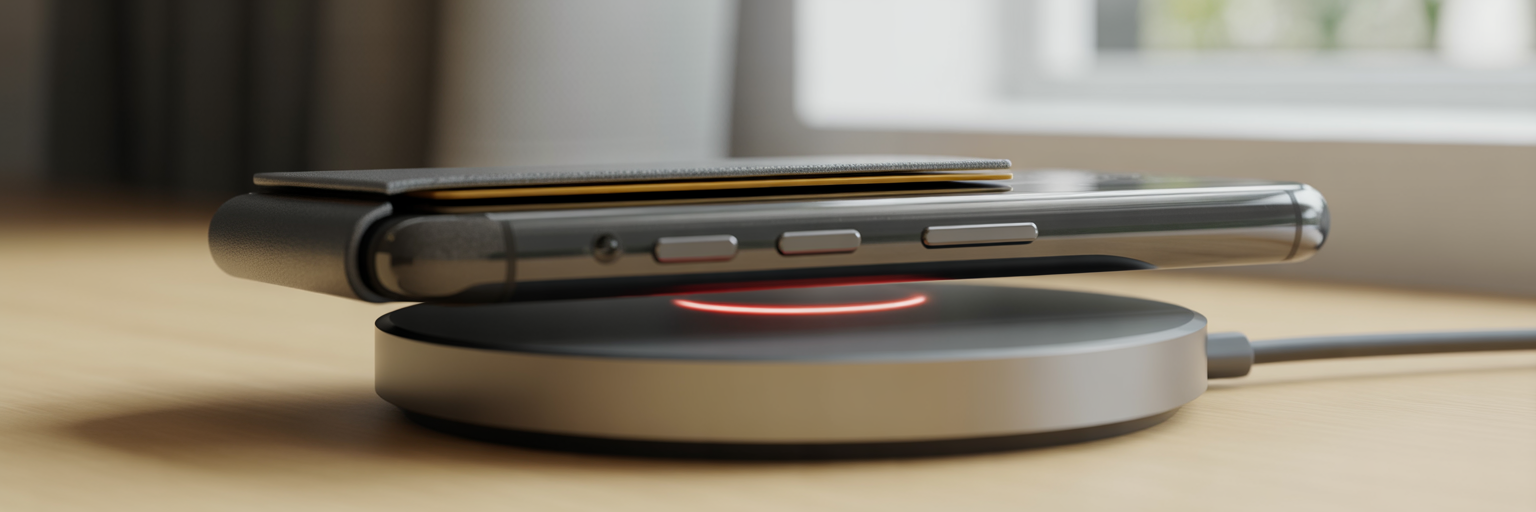
Wireless charging compatibility is a critical factor that many wallet case shoppers overlook. The metal chips and magnetic strips in your credit cards, along with the extra layers of leather or fabric, can block the signal from a Qi or MagSafe charger. This interference not only prevents your phone from charging but can also cause the charger and phone to generate excessive heat, which is a safety concern.
Based on our tests, most folio and rear-slot cases are not compatible with wireless charging when cards are inside. While you could remove your phone from the case every time you need to charge, this is highly impractical and defeats the purpose of having a protective case.
This is where the detachable wallet case proves its superiority. It offers a straightforward solution for anyone who relies on wireless charging or uses magnetic accessories like car mounts. By simply sliding the wallet portion off, you are left with a standard, slim case that works perfectly with MagSafe and other wireless chargers. For iPhone users, a MagSafe wallet case provides the most seamless experience, allowing you to snap the wallet on for your commute and pop it off to charge at your desk.
Making the Right Choice for Your Needs
The best wallet case is the one that aligns with your daily habits. After testing dozens of models, our recommendations come down to three distinct user profiles. By identifying which one matches your needs, you can confidently select a case that delivers on its promise of convenience without creating new frustrations.
Use these guidelines to make your final decision:
- For maximum capacity and screen protection: If you need to carry three or more cards, want the peace of mind of a covered screen, and do not mind a bulkier feel in your pocket, a folio case is your best option.
- For the slimmest possible profile: If you only carry one or two essential cards, value instant access to your screen above all else, and do not use wireless charging, a rear-slot case offers the most streamlined solution.
- For ultimate versatility and tech compatibility: If you depend on wireless charging or use MagSafe accessories and want the freedom to switch between a wallet and a slim case, the detachable wallet is the superior choice.
Ultimately, the best wallet case for iPhone or Samsung is not the one with the most features, but the one that fits seamlessly into your life. Consider your daily routine first, and the right choice will become clear.